

First Look at a Rough, Wild Coast
The chop slapped against the kayaks as they paddled to the submerged rocks. Whitecaps rolled across the mouth of the river where it met the open Gulf. Mullet showered on the surface, flipping and splashing through the waves like they didn’t care that the wind was stacked against them.
This stretch of coastline looks almost untouched. Marsh grass pushes tight to the water’s edge. There are no condos towering over the shoreline, no big marinas humming in the background. That’s what he liked about Kayak Fishing St Marks: it feels like fishing the old Florida coast, where salt and wind still call the shots.
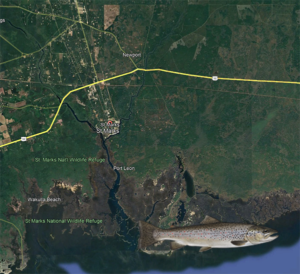
They could barely see the jetty under the choppy water, but James had the line on it from past trips. The rocks formed a subtle spine, running just off the ramp and curving into slightly deeper water. It was a natural place for bait to stack up and predators to sit in ambush, especially on a rough day.
Dialing In a Trout Program
He started with something simple and proven—a Southern Salt Menace Shad in an ultraviolet color on a 1/4-ounce jighead. It wasn’t fancy, but it was made for exactly this kind of work: casting along structure, letting it sink, and then swimming it just above the rocks.
On the first few casts, he felt bumps that never loaded up. At first he thought it might be trout nipping short, but when he looked closer he saw mullet flashing just under the surface. The lure was running through a cloud of baitfish.
On the next cast, he made a long swing parallel to the jetty and let the jig sink deeper before starting his retrieve. Two cranks in, the rod loaded. Not a bump. Not a tap. Just a solid, heavy pull. The fish stayed down, shaking its head the way speckled trout do when they’re more than just “schoolies.”
He worked it carefully, steering it away from the rocks that hid beneath the chop, and slid it into the net. Thick shoulders, big yellow mouth, and spots running down its sides. On the bump board, the speck stretched about 22 1/2 inches—his biggest trout on artificial to date.
Starting a Fishing St Marks trip with a trout like that in the first serious spot of the day felt like a good omen.
Finding a Pattern on the Jetty
He eased the trout back into the water, watched it kick away, and fired another cast down the line of rocks. The wind was still ugly, but the pattern was already taking shape: keep the lure tight to the jetty, let it sink, and swim it just above the rough edges.
A few minutes later, James leaned back into his own fish—a heavy trout that bent his rod deep. Another slab speck came to the kayaks, about the same class as the first one. Two big trout at the first stop, in water that looked more suited to a small craft advisory than a casual afternoon paddle.
Before the bite faded, he stuck another thick trout around the 20-inch mark. The Menace Shad was doing its job, even in the heavy chop. This was the kind of start anglers dream about when they think of Fishing St Marks—powerful fish stacked on early structure, clear evidence that they chose the right piece of shoreline to explore.
Then, as quickly as it started, the bite died.
The wind kept coming. The surface bait stayed scattered. The trout seemed to disappear.
Campfires, Tents, and a Different Kind of Pattern
With the jetty shutting down, they made a smart call. Instead of beating up their arms and gear in the wind, they slid the kayaks back onto the trailer and turned their focus inland.
Newport Campground, just outside St. Marks National Wildlife Refuge, would be home for the night. He set up a simple one-man tent he’d ordered online, nothing fancy. The real upgrade was the self-inflating memory-foam sleeping mat he unrolled inside—a small comfort that would pay off when the rain came.
After a quick lunch, they grabbed lighter gear and walked the refuge trails. The area is full of ditches, ponds, and marsh edges where bass, panfish, and even small redfish can hide. They didn’t find anything big, but they did bump into a few small bass and plenty of “swamp puppies”—dark shapes sliding into the water at the edges of the path.
It wasn’t fast action, but it was part of what makes Fishing St Marks different. There’s more to it than one boat ramp and a single jetty. Between the refuge, the river, and the maze of small creeks, the whole area feels like one big playground for anglers willing to explore.
As the sun set, they headed back to camp, lit a fire, grilled some burgers, and settled in for the night. A heavy rainstorm rolled through after midnight, but the tent held, the sleeping mat stayed dry, and by morning he felt more rested than most camping trips ever allowed.
Day Two: Back to the Rocks
The second morning started with coffee, a quick camp teardown, and the same game plan: hit the jetty first and let the fish tell them what to do next.
The wind had eased, but the water still carried a little chop. This time, he swapped to a lighter jighead—about 1/8 ounce—on the same Menace Shad. The lighter head let him fish a bit higher in the water column and adjust to the change in current.
On one of the first casts, the rod dipped and pulsed. The fish this time was smaller, a “dink” by the standards of yesterday’s giants, but still a solid speckled trout—exactly the kind of fish that builds confidence in a pattern when Fishing St Marks over multiple days.
After a few more casts with the soft plastic, he decided to change tempo and picked up a small jerkbait—a 3-inch Rapala X-Rap in a natural “mangrove minnow” color. If there were more trout working the area, this bait could trigger reaction bites that a swimbait missed.
The first solid strike turned out not to be a trout at all, but a Ladyfish. It rocketed and tail-walked around the kayak, putting on a show before he slipped the hooks free and sent it shooting back into the waves. Not the target species, but proof that predators still worked the jetty.
A Manatee in the Mix
While he worked the jerkbait, a strange sound kept echoing behind the boat—a soft, heavy breath just above the water. At first, he ignored it, locked in on the next cast. Eventually curiosity won, and he glanced over his shoulder.
A large gray head surfaced right next to the kayak.
A manatee, broad and calm, was nosing the plastic hull like an old friend. It drifted up, took another breath, and rolled lazily alongside, completely unbothered by rods, cameras, and lures. For a few moments, the fishing didn’t matter. It was just a silent meeting with one of the Gulf’s gentlest residents.
Encounters like that don’t show up on tide charts. They’re just part of the bonus package when you spend time Fishing St Marks, especially around river mouths and warm shallows where manatees like to roam.
After a few minutes, the big animal slid away, leaving a long wake as it cruised off toward deeper water. The kayaks rocked in its passing, and the anglers went back to work with a little more appreciation for how alive that corner of the coast really is.
Rat Reds in the Mullet Clouds
When the jetty slowed again, they shifted to a new stretch of water—shallower flats dotted with mullet schools pushing nervous wakes.
The first clue was the bait. Mullet flipped and flashed across the surface in tight pods, a sign that predators might be shadowing them. He worked a soft plastic through the edge of one school and felt a solid thump. This time, the head shakes felt different—less frantic than trout, more persistent and bulldog-like.
A small redfish rolled beside the kayak, bronze back shining in the light. It wasn’t a keeper, maybe 14 inches at best, but it was a welcome change of pace. The fish had been tucked right in with the mullet, using the school as both cover and feeding opportunity.
Not long after, another red thumped the bait. This one was about the same size but came with a twist: no spot on the tail. On one side, two normal spots. On the other—nothing. It looked almost like a different fish from each angle.
These “rat reds” wouldn’t fill a cooler, but they proved another piece of the puzzle. When Fishing St Marks, you’re not limited to just one pattern. Trout on the jetty. Reds cruising with bait schools. Ladyfish tearing up jerkbaits. The day might shift species and size classes, but the action keeps you guessing.
Weather, Camp Comfort, and the Feel of the Place
By midday, the fish had given them a full tour: big trout on the rocks, smaller trout at first light, Ladyfish on the jerkbait, and reds on the flats. They’d also dodged storms, slept through a heavy rain in their tents, and watched wildlife move through the refuge like it was a private show.
That’s what stood out most to him about Fishing St Marks—the mix of experiences. It wasn’t just about catching the biggest trout or most reds. It was the way the place felt: quiet, raw, and a little bit unpredictable.
Camping at Newport gave them a comfortable base. The simple tent and memory-foam mat meant a good night’s sleep instead of a miserable one. The trails gave them backup plans when the wind beat the kayaks. The underdeveloped shoreline kept the crowds light and the wildlife close.
For anglers who like trips that feel like complete adventures instead of just single-day outings, Fishing St Marks checks nearly every box.
Practical Tips for Fishing St Marks
Trips like this leave more than just photos and memories. They build a short list of lessons worth carrying forward. For anyone thinking about Fishing St Marks, these are the takeaways he’d bring into the next visit:
-
Start With Structure Near the Ramp
The submerged jetty beside the boat ramp produced their best trout. Jetties, rock piles, and channel edges close to the launch can be prime when wind makes long paddles risky. -
Soft Plastics First, Jerkbaits Second
A shad-style swimbait on a jighead is a solid first choice. When fish follow without committing, switching to a small hard jerkbait can trigger more aggressive strikes. -
Follow the Bait, Not Just the Chart
Mullet schools led them to redfish on the flats. When Fishing St Marks, baitfish activity often matters more than depth numbers on a screen. -
Be Ready for Windy Conditions
The coastline here is exposed. Stiffer wind is common, and chop can build in a hurry. Shorter paddles, protected banks, and quick moves between spots are part of fishing smart. -
Use the Refuge Trails as Backup Plan
When conditions get too rough for kayaks, the wildlife refuge offers miles of bank access. Light tackle and a small box of lures can still save the day. -
Don’t Skip the Camping Gear
A comfortable sleep changes everything. A simple tent and a good sleeping pad turned a rainy night into a minor inconvenience instead of a ruined trip. -
Respect the Wildlife
Manatees, gators, and countless birds share these waters. Keep a safe distance, handle fish carefully, and pack out trash. Part of the magic of Fishing St Marks is how wild it still feels.
Pattern Over Luck
Looking back on the weekend, it would be easy to chalk the big trout up to pure luck. But the pattern was there.
They focused on a submerged jetty with current and bait. They chose lures that fit the conditions. They adjusted jig weight when the tide and chop changed. They followed mullet schools to find reds. They shifted to new water when spots went quiet.
That’s the way productive Fishing St Marks trips usually work. You start with a hunch, listen to what the water tells you, and build a pattern one fish at a time. By the time you leave, you’re not just driving home with photos—you’re carrying a playbook for the next visit.
A Weekend Worth Repeating
By the final afternoon, gear was stowed, kayaks were strapped down, and the last coals of the campfire had gone cold. They’d caught trout up to the mid-20-inch class, found a few scrappy reds, tangled with a Ladyfish, and watched a manatee cruise by like a quiet neighbor.
Most importantly, they proved to themselves that Fishing St Marks is worth the drive, the planning, and the occasional soaking rain. It’s a place where a simple camping trip can turn into a memorable multi-species adventure, and where each visit can teach something new.
As he pulled the truck onto the highway, he was already planning the next run—different tides, maybe a different season, and more time on those flats where the mullet nervous-water never really calmed down.
Call to Action
If you enjoyed this story and want to see the live action—hooksets, kayak battles, jetty trout, manatee encounters, and more—there’s plenty more where it came from. For full videos, rig breakdowns, and real on-the-water lessons to bring into your own Fishing St Marks adventures, head over to Ultimate Fighing Videos:
👉 https://ultimatefishingvideos.com/
Watch, learn, and get inspired for your next trip to the water.