The Fish Bite Sandwich
Not every rig got live bait. On one setup, she made what she called a fish bite sandwich—orange on the bottom, mullet-flavored on top. It was a scent and color combo built for attention. She was hoping for a big drum, the kind that noses along the bottom and finds food more by smell than sight.
It was the thinking that separates casual beach casting from true Surf Fishing Florida strategy. If Pompano were the headline, drum was the bonus feature. The rigs were ready for either.
The Shrimp Prep Most People Skip
She paused long enough to show what many anglers talk about but rarely demonstrate: how she preps dead shrimp for better scent and better hookups.
The shrimp was still half-frozen. She popped the head off, feeding it to a bird that had apparently learned the routine, and peeled the body. Peeling isn’t mandatory, but it pushes scent faster and helps the bait look cleaner on the hook. When things get hectic, she’ll skip it. When there’s time, she does it right.
She slid the shrimp down the hook, buried the point, and added a strip of fish bite as a “security blanket.” That phrase fit perfectly. In Surf Fishing Florida, fish bites keep something on the hook when the bait gets mauled. They also add scent and color that can trigger a second look.
Improvising When the Gear Isn’t Perfect
Then came the confession: she forgot a sand spike.
Instead of packing up or complaining, she adapted. She had brought five rods—more than she usually carries, but the beaches had been slow lately, and the shoreline was empty enough that she could spread out without bothering swimmers or walkers.
So she used her cart as a rod holder.
It wasn’t pretty, but it worked, and that’s the truth about real-world Surf Fishing Florida. Something is always missing or broken or forgotten. The anglers who still catch fish are the ones who keep fishing anyway.
She also brought out another smart winter play: sand fleas called “samplies” in the local slang that she had blanched earlier in the year when they were easy to find. She boiled them for about 20 seconds, dried them completely, and then froze them. Now, in colder weather when digging is miserable, and fleas bury deeper, she still had bait ready to go.
The First Run: Silver in the Wash
The evening had barely settled when a rod thumped.
A hit. Another shake. Then the line came tight and the fish started moving with purpose. The rod tip bounced, the fish jumped, and she leaned back, guiding it through the surf.
It fought with quick, sharp energy, poppy head shakes, bursts of speed, then a sideways slide. That sideways movement is a clue in Surf Fishing Florida. Pompano often fights like that, darting and shimmying instead of bulldozing like a drum.
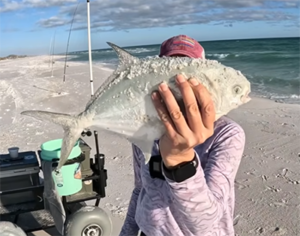
When the fish flashed silver in the wash, she knew.
A pompano is solid, bright, and exactly what winter surf anglers dream about.
She lifted it from the foam and smiled the kind of smile that only shows up when a plan works fast. Winter pompano, she explained, are often better fish. Many are larger, and the odds lean toward keepers.
The Rig That Got It Done
She broke down the winning setup:
-
A DS Custom Tackle float (a “fireball” style)
-
A small black bead below it
-
Ghost shrimp paired with ghost shrimp fish bites
It was simple, but it was tuned. The float helped present the bait cleanly in the wash, keeping it visible and lively-looking. The bead added a small accent. The ghost shrimp did the rest.
The rod had been in the sand for less than fifteen minutes.
That’s how Surf Fishing Florida can go when the beach is right: long stretches of quiet, then sudden action that makes you forget your cold hands.
She measured the fish from nose to fork, 14 1/2 inches. A keeper. A strong start.
Cooler First, Then Order
She wasn’t sentimental about the process. With birds hovering and a known thief nearby, “Mr. Fred,” a local predator that had stolen pompano straight from her bucket before, she didn’t waste time.
Fish went into the cooler first.
Then she got her life in order: find the knife, fill the bucket, and start bleeding fish properly. Winter surf fishing can be chaotic like that. The minute you think you have time, another rod bends.
Sure enough, as she tried to handle the first fish, another rod doubled.
The One That Got Away
The second hookup came fast, right as she was bleeding out her keeper. The fish pulled hard, then suddenly popped the line.
She stood there with slack in her hands, annoyed and a little impressed. She didn’t even know what it was. That’s the reality of Surf Fishing Florida, sometimes the surf takes your answer away.
But she didn’t spiral. She re-rigged, re-baited, and went back to fishing.
Because that’s what the beach rewards: quick resets, not complaints.
Why This Spot Was the Spot
She took a moment to explain the shoreline like a teacher.
The frothy break line marked the first sandbar. In front of her was a clear cut in that bar, where water pushed in and out like a conveyor belt. Fish use those cuts as entrances, sliding up to check the shallow zone, then easing back out to deeper water.
She aimed her baits near that cut and into the darker trough beside it. The second sandbar also came in close, which mattered. When bars sit near the beach, anglers can reach deep water with simple casts.
That’s a major key in Surf Fishing Florida: you don’t need hero casts everywhere. You need smart casts into the right water.
She even moved her last long rod down the beach to get another bait into the rip. That kind of small adjustment often turns a slow evening into a busy one.
Walking the Line, Re-Baiting Like a Pro
With rods spread far apart, she didn’t want to keep hiking back to the cart. So she carried a Tupperware container loaded with the essentials: bait strips, scissors, and tools. She walked rod-to-rod, cleaning old bait and reloading hooks efficiently.
That’s not flashy, but it’s effective. In Surf Fishing Florida, the angler who stays baited stays in the game—especially during short feeding windows near sunset.
Pompano Number Two: Pink Float, Same Truth
Another rod bowed.
The fish shook hard, silver flashing in the wash again. She kept steady pressure and guided it onto the sand. Another keeper pompano.
This one ate ghost shrimp on a rig she tied with a pink pill float and a small glass bead at the bottom. She had also added an “electric chicken” shrimp-flavored fish bite strip.
It wasn’t quite as big as the first, but it was legal, about 13 1/2 inches to the fork. Two pompano in the box before sunset. That’s a winning night of Surf Fishing in Florida, almost anywhere on the Gulf.
When the Bite Finds You While You’re Not Looking
Later, she missed a hit while filming birds. That happens more than anglers admit. Sometimes the bite comes when your attention drifts for one second.
When she turned back, the rod was loaded, and the fish was already running.
This one came in as another keeper pompano, and the bait surprised her. She thought it was the fresh crab she’d just added, but the fish had actually eaten ghost shrimp with a yellow crab-flavored fish bite, one she suspected might be discontinued.
It didn’t matter. The fish approved.
She measured it around 13 1/2 inches again—and bled it quickly. The birds were thick now, and she didn’t want a free-for-all around her cooler.
Sunset Scramble: When Everything Happens at Once
As daylight faded, the pace changed.
Re-bait. Cast. Walk. Check. Measure. Bleed. Cooler. Repeat.
She called it “turbo mode,” and it fit. This is the part of Surf Fishing Florida that feels like a sprint after a long warm-up. When pompano bite, they often bite in clusters, and you don’t want to waste that window fussing with gear.
Another pompano hit a crab knuckle bait paired with orange fish bites. It walked her down the beach, pulling sideways while she followed, gaining line when she could and letting the fish run when it had to.
She landed it clean, another keeper.
Now she was stacking fish, and the evening was turning into the kind of session surf anglers replay all winter.
The Fifth Fish and the Wrapped Rig
Near the end, while she was almost finished packing up, another rod loaded hard and dumped drag. For a moment, she thought it might be something bigger than pompano.
When it surfaced, it was still a pompano nice fish, but it had wrapped itself in the rig. That wrap made it feel heavier and caused the drag to scream.
She shook her head and laughed. It wasn’t a monster. It was just a clever fish using the leader like a lasso.
Number five.
Five quality pompano in one evening is the kind of outcome that keeps people addicted to Surf Fishing Florida, even when the wind is cold and the bait bucket is heavy.
What This Night Taught About Surf Fishing Florida
The story wasn’t just “catching fish.” It was a blueprint:
-
Collect premium bait (ghost shrimp) and keep it secured with magic thread.
-
Fish multiple ranges: first trough, mid-range, and beyond the bars.
-
Target cuts and rips where water funnels food.
-
Use fish bites as backup so hooks stay productive.
-
Stay mobile: move rods when the beach goes quiet and hunt the next honey hole.
-
Expect chaos at sunset and stay organized enough to keep casting.
That’s real Surf Fishing Florida, not just tossing baits into the surf and hoping. It’s reading water, rotating baits, and being ready when the beach lights up.
Call to Action
Want more real-world surf tactics, rig setups, and on-the-sand action like this—plus the full stories behind nights when the pompano chew? Visit Ultimate Fighing Videos for more awesome fishing videos:
https://ultimatefishingvideos.com/


HOW TO catch FISH from the BEACH!
Reel Coastal December 29, 2025 6:30 pm